How is an HTS classification researcher different from a lookup tool?
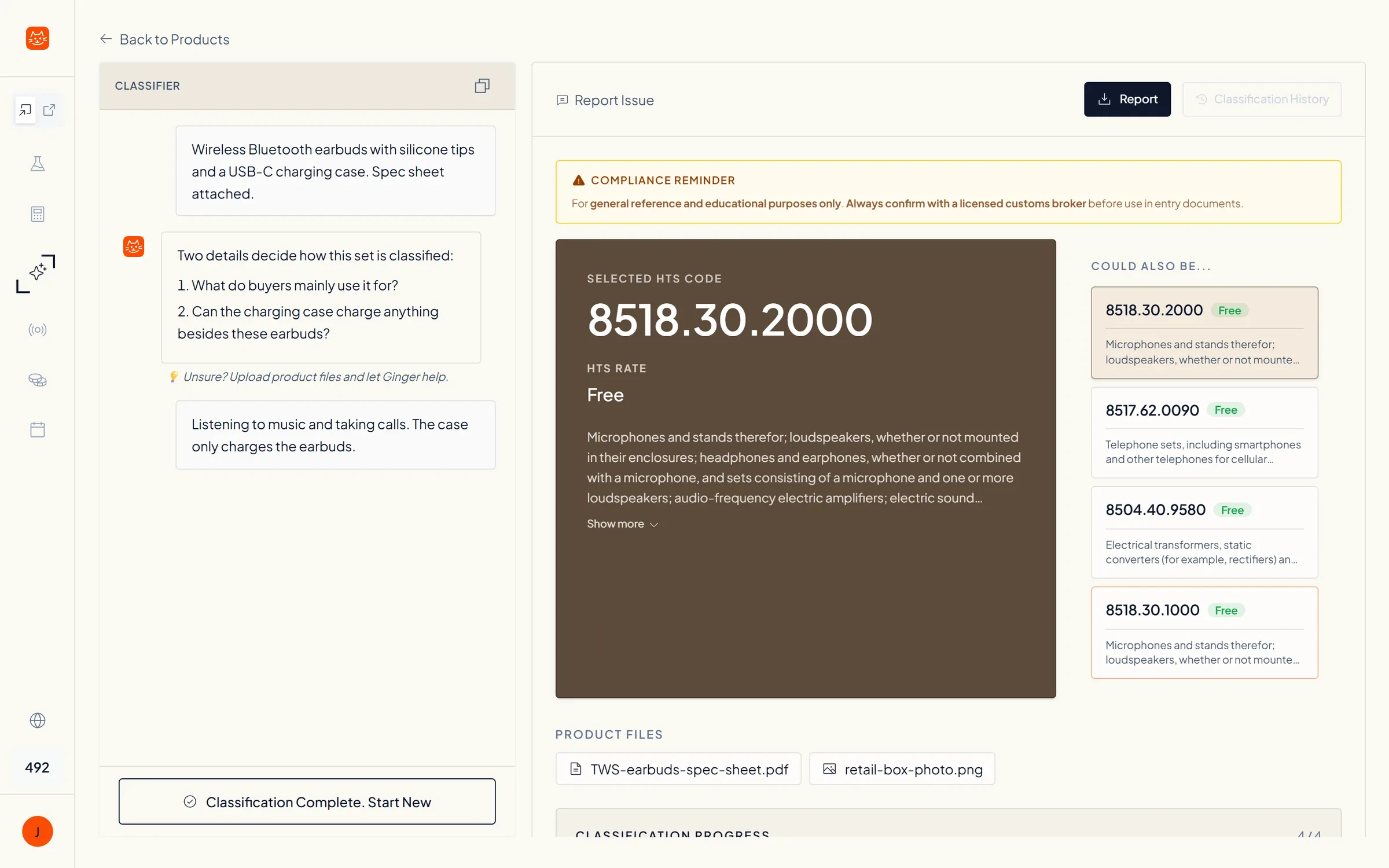
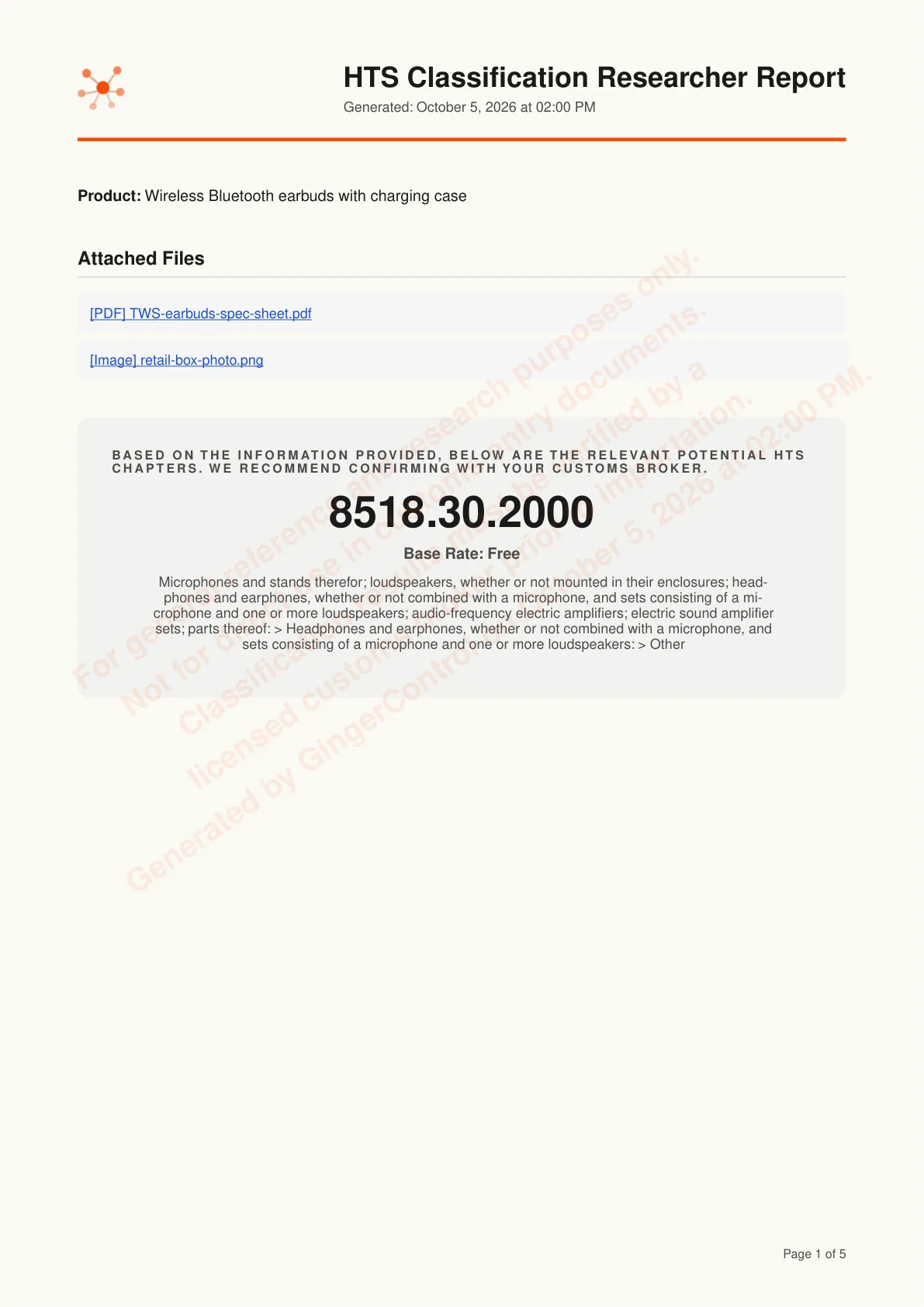
A lookup tool returns a code. The Classification Researcher returns the research behind one: it follows the General Rules of Interpretation in order, detects when a product needs the GRI 3(b) essential-character test, and writes the full reasoning chain into a report. The output is research for a licensed customs broker to review, not a filing decision.
How do I find the HTS code for my product?
Start from what the product is made of, what it does and how it is used, then work down the Harmonized Tariff Schedule by the General Rules of Interpretation: heading first, then subheading, checking the Section and Chapter Notes and CBP rulings on similar goods. The Classification Researcher does that research from your spec sheet and writes it up. For an answer CBP is bound by, request a ruling under 19 CFR Part 177.
Which countries does it classify for?
Three markets. The United States and Canada get the full 10-digit code, and the European Union is in beta with an 8-digit code from the Combined Nomenclature (CN), shared by all 27 member states. You pick the market for each product under Destination before you start. Parts Library and Compliance Radar cover U.S. products only.
Can it find the 10-digit tariff classification number for Canada?
Yes. Pick Canada under Destination, and Ginger returns the full 10-digit classification number from Canada's Customs Tariff: the 6-digit HS subheading, a 2-digit tariff item set by Finance Canada, and a 2-digit statistical suffix for Statistics Canada (CBSA). You get the reasoning behind it the same way as for a U.S. code, and your customs broker reviews it before it goes on a declaration.
How long does a CBP binding ruling take, and how do I request one?
Request it online through eRulings: describe the product and the transaction, up to five items of the same kind per request (19 CFR Part 177). CBP says its New York ruling office generally issues rulings within 30 calendar days, and requests referred to headquarters within 90 days (CBP eRulings). A ruling binds CBP on the transactions it describes as long as the facts you gave are accurate, so it is worth it for codes with real duty at stake.
Can it turn a bill of materials into HTS codes?
Yes, in GingerOS. Upload your BOMs and GingerOS links the products in your database to each other, so you can see both ways: what each part goes into and what each product is made from. When it classifies a product, it reads the BOM to weigh which component gives the whole its essential character. BOM upload and batch classification are for GingerOS customers, not the GingerLite app.
Can it check the HTS codes we already use?
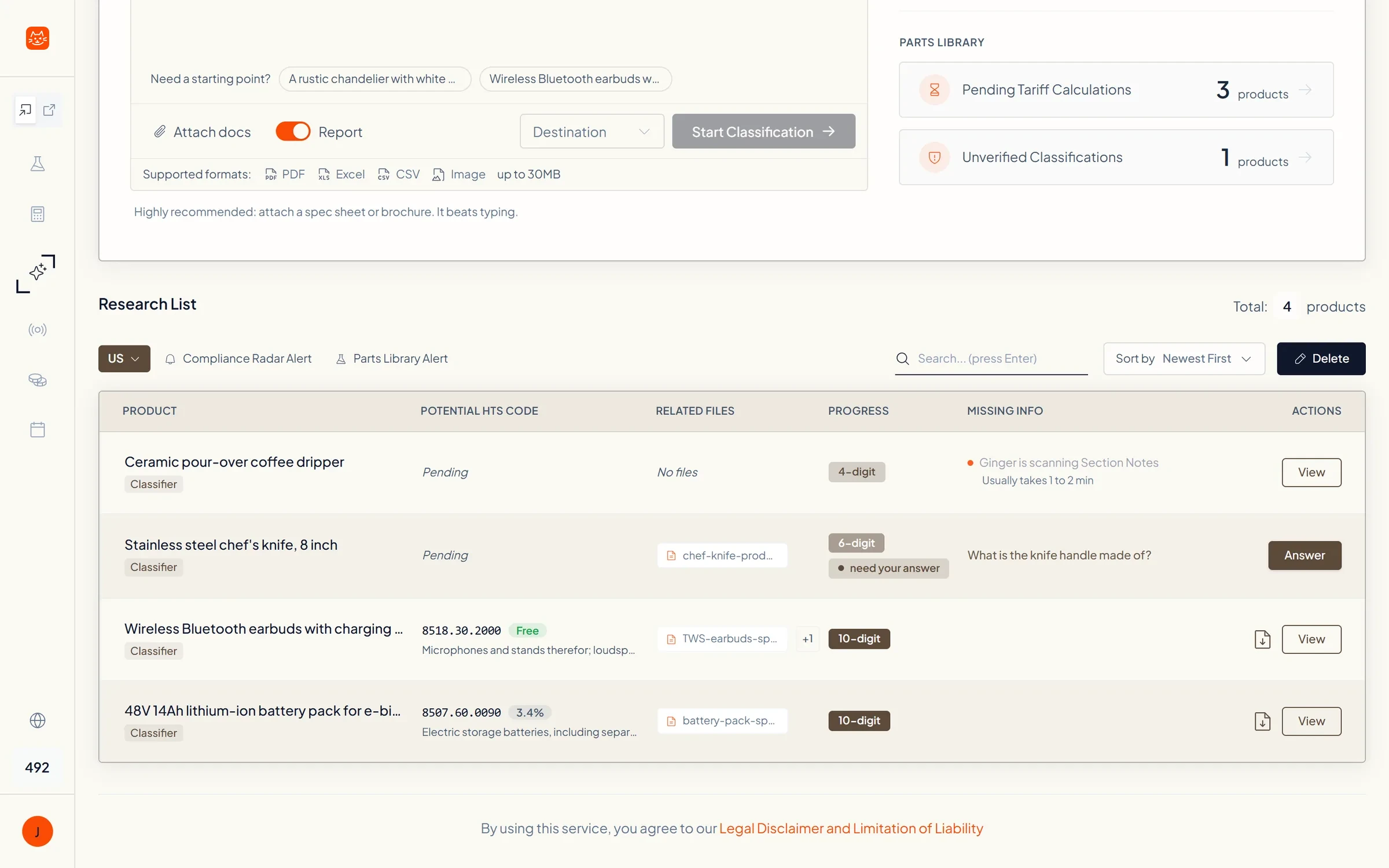
Yes. In the GingerLite app, import your products with their current codes into the Parts Library and re-audit them one at a time in the Classification Researcher: each comes back with its reasoning next to the code on file, and the ones that differ are the ones to review with your broker. Rechecking a whole catalog in one run, and again whenever a rule changes, is part of GingerOS.
How does it handle composite goods and sets under GRI 3(b)?
When GRI 1 through 3(a) cannot settle a product on one heading, GRI 3(b) asks which part gives the whole its essential character. The classifier detects that trigger on its own, weighs the role, value and use of each part, and shows the result as its own step in the reasoning, so a broker can see why the set landed where it did.
When does it use CBP CROSS rulings?
Before it decides. It reads rulings on comparable products first and reasons through the GRI with them in hand, the way a broker works, instead of picking a code and attaching rulings that seem to agree afterwards.
Why does it ask me questions?
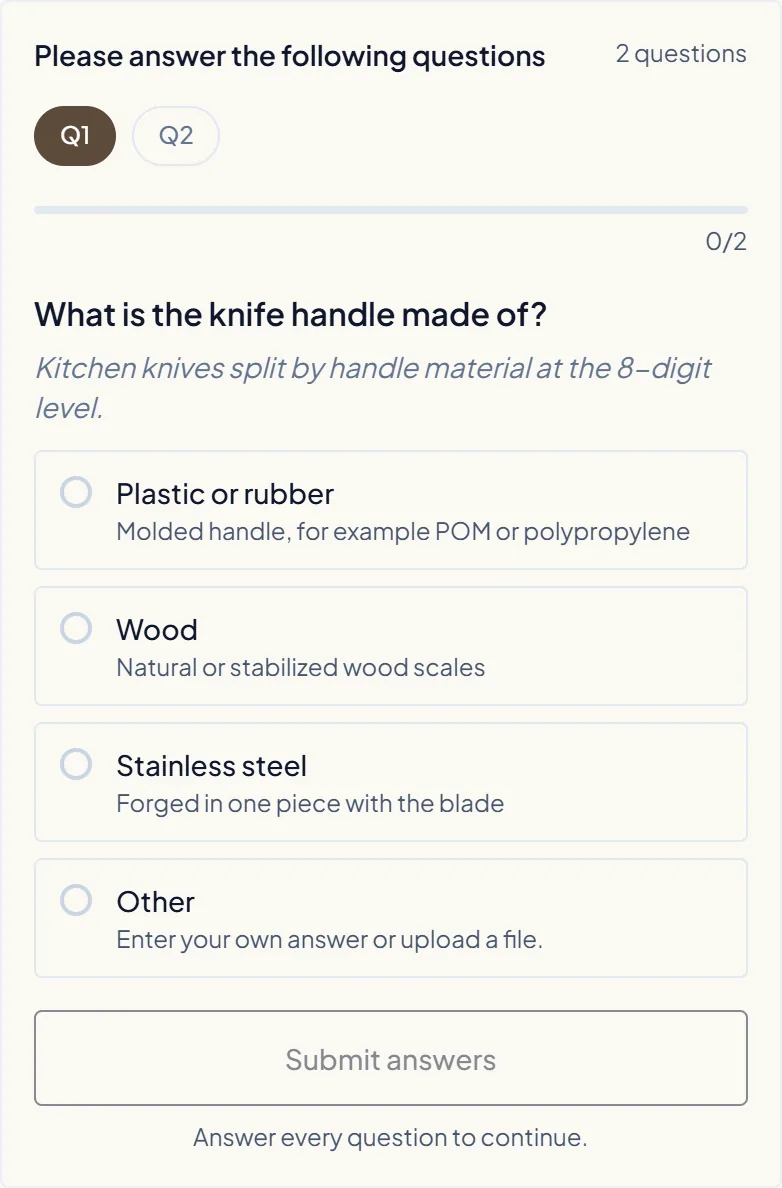
Because some codes turn on a fact the documents do not state, like what a handle is made of or what buyers mainly use a product for. When that happens Ginger asks one multiple-choice question about that fact and nothing else. If your spec sheet answers it, you will not be asked.
What can I give it?
A written description, or files: PDF spec sheets and brochures, Excel or CSV sheets, and product photos, up to 30 MB. A spec sheet usually beats typing, because it answers questions before Ginger has to ask them.
How does it help when CBP sends a CF-28 about an old classification?
Each run keeps the reasoning chain, the questions and answers, and the rulings consulted, so you can show why a code was chosen instead of rebuilding it from memory. Importers keep classification records for five years under 19 CFR 163.4. Your licensed customs broker leads the CF-28 response itself.
Can I put the result straight on a customs entry?
No. Per CBP ruling HQ H290535, classifying specific goods beyond six digits for importation is customs business under 19 U.S.C. § 1641, which needs a licensed customs broker. GingerControl is not a broker. The report is research your broker reviews before it goes into entry documents, and the same goes for a Canadian or EU code before it goes on a declaration.